University of Mary Washington Then & Now

A Photography Exhibition

Posts in the UMW category

According to University of Mary Washington: A Centennial History, 1908–2008, “Among the new campus activities that appeared during the 1970s, the most extraordinary (and inexplicable) was something called the Wo-Man Contest.  The event was conceived in the fall of 1977 by the Afro-American Association, whose only male member, freshman Cedric Rucker, took the lead in the contest’s development and promotion.” 1  The event was immediately popular, and the popularity of the Wo-Man contest continued into the early 1990s, but was eventually phased out; however, in October 1999, the Mr. MWC contest appeared.  “Though Mr. MWC obviously shared certain farcical elements with the late Wo-Man contest, according to the Free Lance-Star it was ‘nothing like the controversial’ predecessor. ‘The new, feel-good Mr. MWC contest,’ it asserted, ‘is far kinder and gentler than Wo-Man.” 2

Today, the Mr. MWC tradition continues, simply under a different name: Mr. UMW.

Mr UMW

Mr. UMW Contest, 2013
Contestants include: Mr. Alvey: Tyler Gimple; Mr. Apartments: Rob Jarvis; Mr. Arrington: John Rowley; Mr. Bushnell: Frank Kear; Mr. Custis: Drew Kalasky; Mr. Eagle Landing: Ethan Lane; Mr. Framar: Sam Relken; Mr. Jefferson: Brandon Smith; Mr. Mason: Kyle Phalen; Mr. Marshall: Nathan Bradley; Mr. Randolph: Ben Cunningham; Mr. Russell: Josh Mwandu
Alyssa Lieurance, "Mr. UMW," November 4, 2013, Personal Collection of Alyssa Lieurance, University of Mary Washington.

Show 2 footnotes

  1. William B. Crawley, Jr., University of Mary Washington: A Centennial History, 1908-2008 (Fredericksburg: University of Mary Washington Foundation, 2008), 252.
  2. Ibid., 721.

A tradition since Mary Washington’s inception, the annual commencement ceremonies have always been an important and special time for graduating seniors.  Today commencement occurs annually on Ball Circle. 

Modern Grads

UMW Graduates, 2011
Featured left to right: Caitrin Smith, Christine Melchione, Erin Lombard, Melissa Evich, and Kelly Reeder
Kelly Reeder, "Class of 2011," 2011, Personal Collection of Kelly Reeder, University of Mary Washington.

Class of 2013 Commencement (1)

The University of Mary Washington's 2013 commencement ceremony, 2013
"The University of Mary Washington's 2013 commencement ceremony," May 11, 2013, University of Mary Washington, UMW's Undergraduate Commencement 2013, University of Mary Washington Facebook page.

Devil Goat Day is UMW’s oldest tradition that still occurs today. Devil-Goat Day began in 1926 when Eileen Kramer Dodd joined the faculty and became the sponsor of the junior class.1 She and the junior class “decided to have a goat as [their] symbol.”2 One morning, all of the juniors and Dodd “appeared in the dining hall wearing white skirts and white sweatshirts decorated with a felt green goat.”3 This sparked the seniors to pick “a distinctive symbol, and they adopted a red devil as an emblem. So began the Devil-Goat rivalry.”4  Alternating classes were designated as either Devils or Goats, as events creating competition between Senior and Sophomores, and Juniors and Freshman occurred annually, which developed into Devil-Goat Day.5 However, in the 1990s students were becoming indifferent to the school’s traditions.6 In 1992, “sponsorship of the event was taken over by the freshman class officers, who tried to rejuvenate it” by adding music and more daring activities such as a climbing wall, a velcro wall, jousting and human bungees.7

The freshman must have succeeded in rejuvenating Devil-Goat Day, because the event still occurs today in 2014, and is still planned by the freshman class officers on Class Council. The tradition of having freshman and juniors versus sophomores and seniors continues as well as having the odd numbered graduation classes as Devils and even numbered graduation classes as Goats. Currently, at freshman orientation, Dean Rucker always announces to the new class of students whether they are Devils or Goats. (Dean Rucker himself is a Devil.) Devil-Goat Day continues to take place on Ball Circle, and has had a great turn out within the last few years. One newer tradition that is a part of Devil-Goat Day is trying to collect the free Devil or Goat t-shirts handed out by Class Council every year. Students will line up sometimes an hour or more before in order to make sure they can get one out of the limited supply of t-shirts. This year, in 2014, the t-shirts were handed out by Lee Hall and the Devil t-shirt line extended down campus walk towards Trinkle Hall, while the Goat t-shirt line extended down past Virginia Hall.

President Hurley on Devil Goat Day, April 25, 2013

President Hurley on Devil Goat Day, April 25, 2013
Elizabeth Henry, "President Hurley on Devil Goat Day," April 25, 2013, Personal Collection of Elizabeth Henry, University of Mary Washington.

Show 7 footnotes

  1. William B. Crawley Jr., University of Mary Washington: A Centennial History, 1908-2008 (Fredericksburg: University of Mary Washington Foundation, 2008), 26.
  2. Ibid.
  3. Ibid.
  4. Ibid.
  5. Ibid., 27.
  6. Ibid., 719.
  7. Ibid.

Woodard Campus Center was opened in 1987, named in honor of Prince Briggs Woodard, President of the University from 1974 to 1982. Woodard sits in the depression “roughly between Willard and Melchers,” which was a difficult site for construction. However, it provided the opportunity to expand Campus Walk and link the main body of the school with Goolrick Hall and the northern end of campus. The upper floor features the Great Hall, an open space used for special events which featured mobile partitions to create temporary meeting spaces.1 Woodard is currently home to the Eagle’s Nest dining facilities, the University Post Office, and UMW’s radio station. The Great Hall and UMW Commuters’ Lounge are now inaccessible as much of the building is now under renovation. When construction is complete, Woodard will housed the College of Business.2

Woodard Campus Center, 2014

Woodard, 2014
Alexandria Parrish, “Woodard,” February 19 2014, Personal Collection of Alexandria Parrish. University of Mary Washington.

Show 2 footnotes

  1. William B. Crawley Jr., University of Mary Washington: A Centennial History, 1908-2008 (Fredericksburg: University of Mary Washington Foundation, 2008), 370-72.
  2. Lindley Estes, “More construction begins at University of Mary Washington,” (Fredericksburg, VA.) Free Lance-Star, March 22, 2014, http://news.fredericksburg.com/newsdesk/2014/03/22/more-construction-begins-on-campus/(Accessed April 28, 2014).

“In 1936, financed by donations from graduating classes and private individuals (most notably Mrs. A. B. Chandler), gates were constructed below Monroe Hall at the Sunken Road entrance to the College.”1

Although the Sunken Road Gate is not the main entrance to the University today, it is still regularly used as an entrance to the campus. The main entrance to the University is the Double Drive Gate off of College Avenue.

Class Officers In Front Of Gate, 1948

Class Officers In Front Of Gate, 1948
From left to right: Lois Saunier, senior class; Barbara Haislip, junior class; Carolyn Myers, sophomore class; Sara Katherine Jordan, freshman class
"Class Officers In Front Of Gate," 1948, Centennial Collection, UMW Digital Archives, University of Mary Washington.


Sunken Road Gate, March 21, 2014

Sunken Road Gate, March 21, 2014
Jessica Reingold, "Sunken Road Gate," March 21, 2014, Personal Collection of Jessica Reingold, University of Mary Washington.

Show 1 footnote

  1. William B. Crawley Jr., University of Mary Washington: A Centennial History, 1908-2008 (Fredericksburg: University of Mary Washington Foundation, 2008), 33.

“In June 1930 Governor John Garland Pollard authorized the construction of the new kitchen and dining hall” 1  with living quarters in the basement for the Home Economics Department, and in spring 1931 the new dining hall was opened for occupancy. 2

Today, Seacobeck Hall is still the primary dining hall, and  it now offers three dining rooms for students with their own unique cuisine and décor: The Washington Diner, The Smart Market, and the UMW Bistro.  The Historic Dining Room at Seacobeck is used Monday-Friday for UMW faculty, staff, and their guests.3

Seacobeck Now

Seacobeck Hall, 2014
Alexandra Parrish, "Seacobeck Hall," March 21, 2014, Personal collection of Alexandria Parrish, University of Mary Washington.

Show 3 footnotes

  1. William B. Crawley, Jr., University of Mary Washington: A Centennial History, 1908-2008 (Fredericksburg: University of Mary Washington Foundation, 2008), 31.
  2. Ibid., 31
  3. University of Mary Washington Dining, “The Restaurants at Seacobeck,” University of Mary Washington,http://www.umwdining.com/locations/index.html (Accessed April 6, 2014).

Originally named Ridge Crest, Marye House was constructed in the 1910s as the President’s residence, but over the years its purpose has varied.  It has been used as a student residence hall, the Spanish house1, and is used today as the Office of Residence Life and Commuter Student Services, Judicial Affairs and Community Responsibility, and the Dean of Student Life.

Marye House Now

Marye House, 2014
Carly Winfield, "Marye House," March 21, 2014, Personal Collection of Carly Winfield, University of Mary Washington.

Show 1 footnote

  1. William B. Crawley, Jr., University of Mary Washington: A Centennial History, 1908-2008 (Fredericksburg: University of Mary Washington Foundation, 2008), 11.

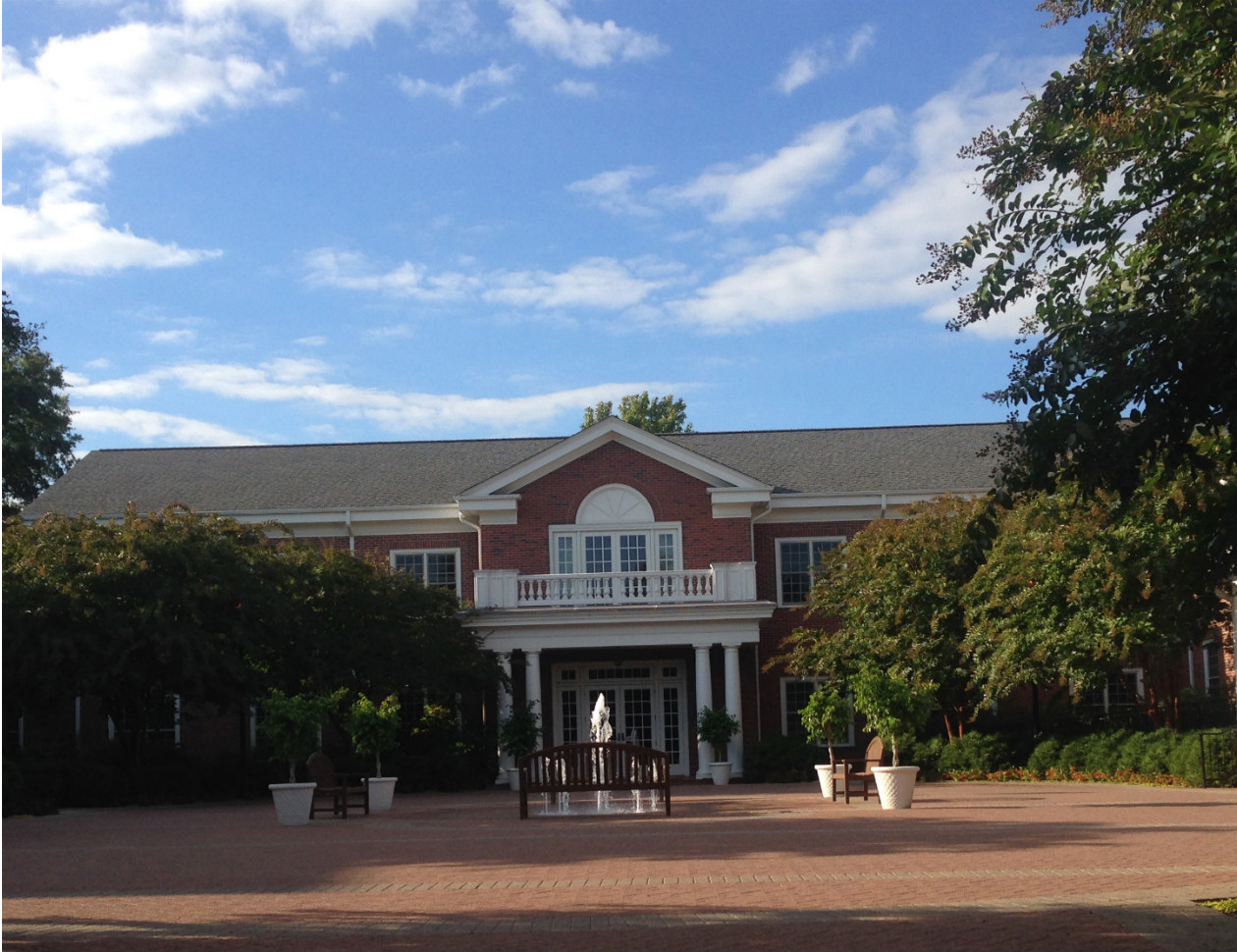
Trench Hill was acquired by the College in 1947. The College remodeled it and designated it for academically talented students and later for the College’s first male students.1 Eventually it became the headquarters of the Alumni Association. In 2004, it was converted to an renamed “Kalnen Inn at Trench Hill, after the alumna benefactor Elizabeth Kalnen ’37.”2

The Jepson Alumni Executive Center is 24,000-square-feet was created by incorporating an addition to Trench Hill “to create a U-shaped, tri-unit structure.”3 The gates to the Jepson Alumni Executive Center are refurbished gates from 1900 France that were commissioned by Henry Phipps, who was a business partner of Andrew Carnegie.4

Today, the Kalnen Inn and the Jepson Executive Alumni continue as a bed-and-breakfast and as a venue available for events.

Jepson Alumni Center (formally Kalnen Inn and Trench Hill), September 22, 2013

Kalnen Inn, September 22, 2013
Jessica Reingold, "Kalnen Inn," September 22, 2013, Personal Collection of Jessica Reingold, University of Mary Washington.

Jepson Alumni Center, September 22, 2013

Jepson Alumni Executive Center, September 22, 2013
Jessica Reingold, "Jepson Alumni Executive Center," September 22, 2013, Personal Collection of Jessica Reingold, University of Mary Washington.


Fountain at the Jepson Alumni Center, September 22, 2013

Fountain at the Jepson Alumni Executive Center, September 22, 2013
Jessica Reingold, "Fountain at the Jepson Executive Alumni Center," September 22, 2013, Personal Collection of Jessica Reingold, University of Mary Washington.

Show 4 footnotes

  1. William B. Crawley Jr., University of Mary Washington: A Centennial History, 1908-2008 (Fredericksburg: University of Mary Washington Foundation, 2008), 57.
  2. William B. Crawley Jr., University of Mary Washington: A Centennial History, 1908-2008 (Fredericksburg: University of Mary Washington Foundation, 2008), 547.
  3. Ibid.
  4. Ibid.

Construction on George Washington Hall (also known as GW Hall) began in 1938 and was completed the following year.1 The building was established to answer the need for classrooms and administrative space necessary to serve the growing student population. The building also contained an auditorium capable of seating 1,624 people and included a stage with dressing rooms located below. 2 In 1980, the auditorium was named Eileen Kramer Dodd Auditorium in honor of a former professor who retired after forty four years at the College.3 Located below the auditorium was a mirrored ballroom known as the “Hall of Mirrors” used for events and formal dances. The roof of George Washington Hall contained a roof garden used for special events but also as a recreational area for students to relax and eat. Today, GW is the home of administrative offices, including the office of the president. Neither the roof garden nor the Hall of Mirrors are present today, however, Dodd Auditorium is still a central part of student life. The auditorium holds formal events, performance art shows, and “Cheap Seats” a program that shows popular movies for students for only a dollar admission.

4lgLqKjH9j1UZtba2lkcpt0WVt_G5MNIvdNf1U2a7p78s94ZPQL754UlajtJjK_8TQ=w1165-h460

George Washington Hall, 2014
Meaghan Sullivan, "George Washington Hall," March 21, 2014, Personal collection of Meaghan Sullivan, University of Mary Washington

Show 3 footnotes

  1. William B. Crawley Jr., University of Mary Washington: A Centennial History, 1908-2008 (Fredericksburg: University of Mary Washington Foundation, 2008),43
  2. Ibid.
  3. Ibid.,44.

The Framar pool was a part of the original purchase of Framar house from Dr. and Mrs. Frank Reichel in 1946. Adjacent to the pool was a picnic area where students could grill and eat outside. The pool was a popular hangout for students and was a great place to tan on summer days. 1  Today, the area is home to an outdoor basketball court. The picnic area still stands but is not as popular as it was in the past and is no longer home to grilling or summer activities.

p4TKFWM6Zbe8YQXhkhjKX9WdGtDYVgi_2DCsaq4vU948ZWT8N0kShMOtTNfVN--bQQ=w1165-h460

Framar pool, March 21, 2014
Meaghan Sullivan, "Basketball Court," March 21, 2014, Personal Collection of Meaghan Sullivan, University of Mary Washington.
Show 1 footnote

  1. Wiliam B. Crawley Jr., University of Mary Washington: A Centennial History, 1908-2008 (Fredericksburg: University of Mary Washington Foundation, 2008), 56.
css.php